New Year, New Camera, and a New Way of Shooting
As 2026 rolls in, changes to how I shoot are also in the works.
I’m not one to jump on the trend bandwagon, and I’m typically slow to adopt new technology, simply because new does not always equate to better, or necessary, and in the world of photography, changing ecosystems can be extremely expensive.
In my Oct 29, 2024, post, A Primer on the last two generations of Nikon F-Mount Lens, I discuss why I had not yet jumped to mirrorless cameras, including the added cost of Z-mount lenses.
So why, in a time when influencers are talking about film photography and going back to DSLRs, am I finally making the jump to mirrorless? My reasons generally fall into categories below:
The right camera (heart vs head)
New adapters and updated firmware make it possible to use my existing lenses
3rd-party lens manufacturers have started making valuable lenses at more accessible prices
It is helpful to have two low-light capable cameras
The Right Camera
Finally settling on a new camera was a complicated process for me, I considered a number of cameras from Nikon and Fujifilm, and in the end, my decision was a matter of heart over head, and the Nikon Z f (Zf) won.
Click photos to enlarge
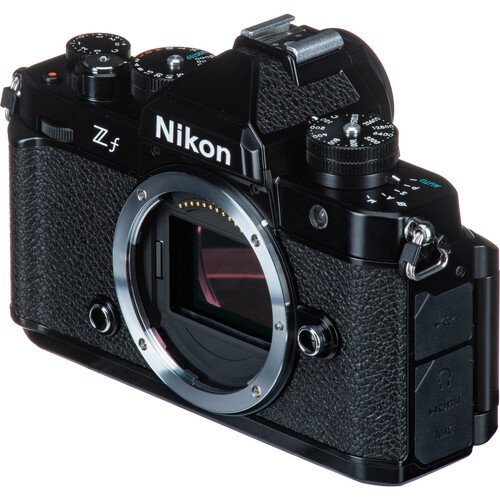
Nikon Zf. Image from B&H.
I seriously considered the Nikon Z 6III, so much so that I had it in my shopping cart, only pausing as my mouse hovered over the submit button. If I shot a lot of sports, events, or weddings, or if I shot more video, I would have gone with the Nikon Z 6III. This was the “head” choice. There is nothing wrong with the Z 6III, it just felt like a straight upgrade to what I already had, and I wanted something different.
When doubt took hold, preventing me from purchasing the Z 6III, my mind went to the Fujifilm X-Pro 2 and the Nikon Z f.
Regarding the X-Pro 2, I was intrigued by the idea of a rangefinder-style mirrorless camera that still rocks an OVF. Many of the documentary photographers I follow use a Fujifilm X-Pro of one version or another, but I would have to buy all new glass, batteries, and accessories. Also, when Fujifilm released the X-Pro 3, they removed a few much-loved features found in the X-Pro 1 and X-Pro 2, so it didn’t seem like a system worth investing in when it was already going in the wrong direction.
That left the Zf. Admittedly, the Zf is already two and a half years old, and during that time, most reviews have fallen into one of two camps: love-it or hate-it. Whether other people love it or hate it is irrelevant. I buy gear for me, not for others. The reasons others love or hate it, however, can provide the information needed to help make a final decision, so that is where I dug in.
In the end, the Zf was a heart choice:
I wanted something different while retaining my investment in lenses.
I like the way the camera looks.
It provides multiple possible shooting experiences.
It is less intimidating to others when shooting travel and street photography
Has the best-in-class manual lens support
When using the Nikon FTZ II lens adaptor (FTZII), I can use all of my existing lenses - even if most of them will now be manual focus only.
New Adapters and Updated Firmware
To reduce the cost of switching to a camera with a different lens mount, I must be able to use my existing Nikon F-mount lenses. Even with the adaptor sold by Nikon, many early reviews of the Zf with the FTZII reported focus indicator incompatibility when using non-G Nikon lenses (see this post for more info about pre-Z lenses). These issues seem to have been resolved in firmware releases, and all of my AF-D lenses show the green focus indicator when used on the Zf with the FTZII.
FTZ II F-Mount Lens Support
Below is a list of my F-mount lenses and what is supported on the Zf when using the FTZII:
| Lens | Type | In-camera Focus Indicator | Auto Focus Support |
|---|---|---|---|
| Nikon AF-S Nikkor 24-70mm f/2.8G ED | Zoom | Yes | Yes |
| Tamron SP 35mm f/1.8 Di VC USD | Prime | Yes | Lens Firmware v3 required |
| Nikon AF Nikkor 50mm f/1.8D | Prime | Yes | No |
| Nikon AF Nikkor 85mm f/1.8D | Prime | Yes | No |
| Nikon AF Micro Nikkor 105mm f/2.8D | Prime | Yes | No |
| Nikon AF Nikkor 80-200mm f/2.8D "Two-Touch" |
Zoom | Yes | No |
As you can see in the table above, no Nikon AF-D lenses will auto focus when using the FTZII, something that has irritated much of Nikon’s customer base, and will never be fixed with a firmware update. The reason the FTZII only supports autofocus on AF-S lenses is that, before AF-S, all Nikon AF lenses used a mechanical screw-drive for auto focusing, and Nikon’s F-to-Z adapters are electronic focus only. Furthermore, since Nikon is primarily in the business of creating lenses, no one expects Nikon ever to release an adaptor that will support their old mechanical screw drive. Nikon wants customers to buy Nikon Z lenses. This is where Monster Adapter has stepped in.
To date, the LA-FZ1 Monster Adapter is the only adapter that supports the Nikon screw drive, and because of that, they are very hard to come by. The ability to auto focus AF-D lenses is huge for lens junkies! As soon as one becomes available from a legitimate seller, I’ll buy one.
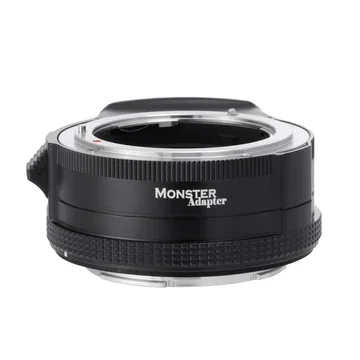
According to Monster Adapter’s website, the LA-FZ1 supports the following:
AF capable with Nikon legacy AF and AF-D Type screw driven lenses.
Automatic exposure control with built-in aperture motor.
Activate IBIS automatically if the camera is capable.
Activate ‘Focus Assist’ automatically in manual focus mode.
Firmware upgradable via built-in USB Type-C port.
Noting that:
“The current firmware does NOT include autofocus support for AF-I, AF-S, and AF-P lenses, nor support of EMD electromagnetic aperture and lens VR. Please pay attention to future firmware update notifications, but we do not guarantee that all these features above will be supported.”
In addition to supporting the AF screw drive, Monster Adapter also claims to support the aperture motor. I’m curious to learn more about this, and their website doesn't go into detail. One of the downsides of the FTZ and FTZII adapters is that they do not support on-lens aperture rings, so the photographer must control aperture on the camera. While it is not a deal breaker, I would love to control aperture using the lens’s aperture ring. It is more fun than using the front dial and fits the retro vibe of the Zf.
The LA-FZ1 has received mixed reviews regarding lens compatibility, so let’s hope Monster Adapter provides regular firmware updates, and it will eventually live up to its promises.
Tamron Lenses
As shown in the table above, I also have a single Tamron lens. Unfortunately, Tamron DSLR lenses require a firmware update to work with FTZ adapters, and the firmware can only be updated via Tamron’s TAP-in Console, a device that must be purchased separately. I say, “unfortunately,” because I did not already own this device and had to buy one, which was an unexpected expense. It is also unfortunate because even with the latest version of their TAP-in software utility, the TAP-in Console will not update my copy of this lens. This issue is still not resolved, but Tamron USA support has been very responsive, and I’m now shipping the lens to them for the update. My lens has firmware version 2, and version 3 is required to work with any FTZ adapter.
Useful Tamron links:
Tap-in Software Utility (required to use the TAP-in Console hardware device)
Incidentally, the Tamron 35mm is one of my favorite prime lenses on my Nikon D780. It is exceptionally sharp, autofocus is fast, quiet, and accurate, it’s weather-sealed, has the closest focusing distance in its class, and has integrated vibration compensation. It really is a fantastic lens!
3rd-Party Z-Mount Lens
I’ve mentioned here and elsewhere that Nikon Z lenses are extremely expensive, and to some, justifiably so. According to Hugh Brownstone at Three Men and an Elephant (whom I have a lot of respect for),
“I don’t think there is another camera and echo system out there today, irrespective of sensor size…quite as good for anywhere near the price, for some of us, at any price. Just, wow!”
That is high praise for the Nikon Z system coming from someone who loves and uses Leica as much as he does!
However, for those of us who do not make a living from photography alone, lens price is a big deal.
There is another thing to consider when buying lenses for the Zf. If the retro vibe is one of the reasons you purchased a Zf, Nikon doesn't make any lenses that, in my opinion, match the camera's look and feel. They do sell a few pancake and special edition (SE) lenses that are meant to go with the Zf, but none of them jazz me in the least.
My great experience with Tamron, aside from the firmware issue, has given me confidence to explore lenses from other manufacturers. However, as I’m writing this, there are only a few retro-style lenses explicitly made for the Z-mount, and even fewer that are worth buying. In fact, there are only two manufacturers of retro-style lenses that, in my mind, fall into the worth-buying category: Voigtländer and Thypoch. Voigtländer is a well-established German lens manufacturer that has been making photographic lenses since 1839. Thypoch is a China-based newcomer that debuted its first lens at the Photopia 2023 event in Hamburg, Germany, for Leica M-mount cameras. Thypoch is a sister company to DZO Optics, which started in 2013, so they have a decade more experience than it might seem.
I would love to own a Voigtländer, and maybe one day I will, but for now, having just spent a chunk of cash on a Zf, I bought two Thypoch Simera Z-mount lenses, a 35mm f/1.4 and a 50mm f/1.4. Given the holiday discounts, I couldn’t find used versions for less than the new price. Both are non-CPU, manual focus lenses. This means that no information is sent from the lens to the camera, and vice versa. The Thypoch Simera lenses are beautiful, exceptionally well-built, designed to support zone-focusing, and feature working aperture rings.
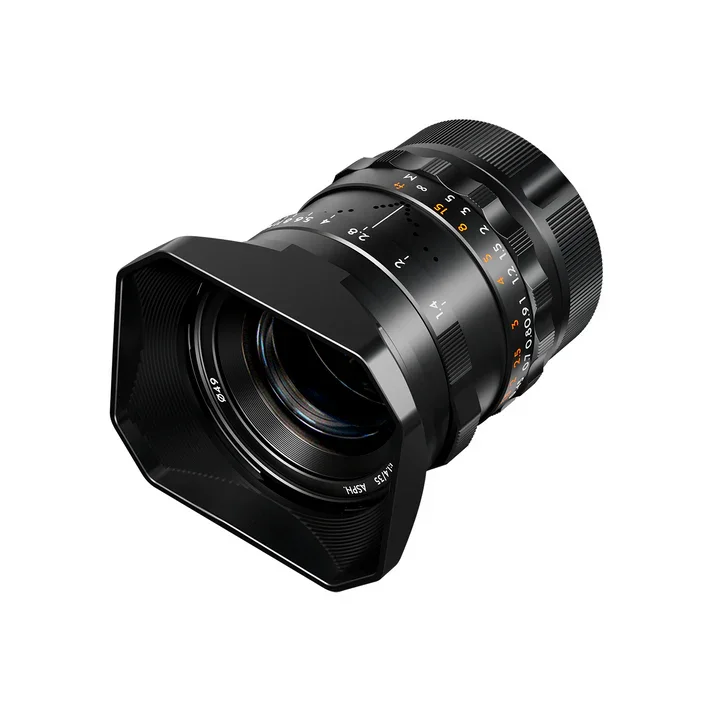
The image above is the Simera 35mm f/1.4 Z-mount lens with the included rectangular lens hood, taken from the Thypoch website.
Yes, Nikon makes an autofocus 35mm f/1.4 and 50mm f/1.4, but even with holiday discounts, the Nikon offerings cost over $200 more per lens. They are also longer, wider, and heavier. And they don’t match the Zf retro look and shooting experience.
Nikon Z 35mm f/1.4. Image from Nikon website.
Thypoch currently offers 28, 35, and 50mm focal lengths for the Z-mount in both black and silver. With the money saved by buying Thypoch instead of Nikon over the holidays, I could have added the 28mm Simera to my kit. In the M-mount, they also offer 21 and 75mm options, so I’m anticipating Z-mount versions at some point. Personally, I’d love to see a 90mm, but it need not be f/1.4. An f/2 aperture would be sufficient and should compete well with the M-mount Voigtländer 90mm APO-Ultron f/2, especially if it were internal focusing, which the Voigtländer is not.
As I’m writing this, Thypoch has announced two new lens lines: Eureka and Ksana. Both lines offer extremely compact lenses for the Leica M-mount. Eureka offers a 28mm f/2.8 and a 50mm f/2, while Ksana offers a single 21mm f/3.5 lens, which is very tempting and exactly the kind of lens I’m looking for to match the Nikon Zf.
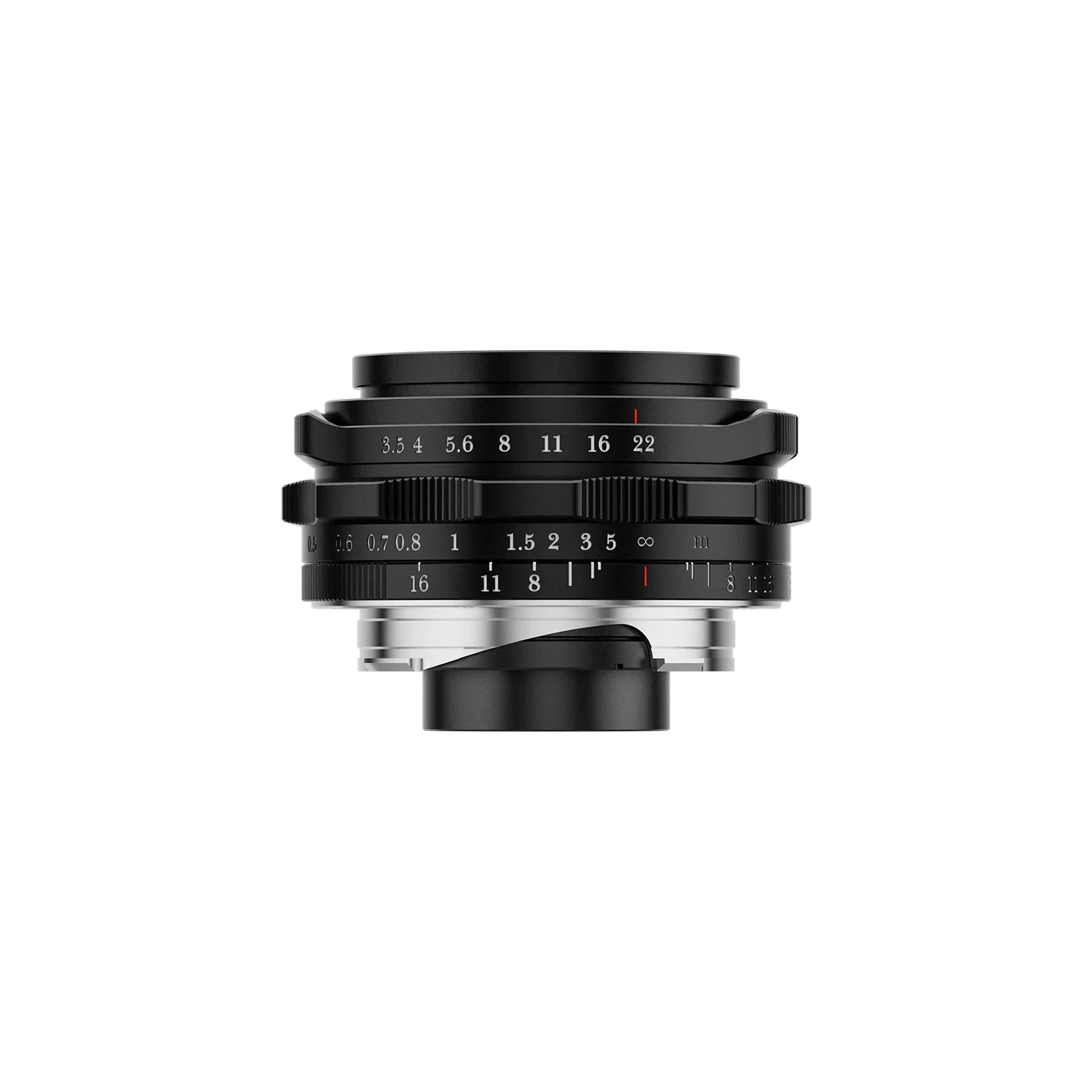
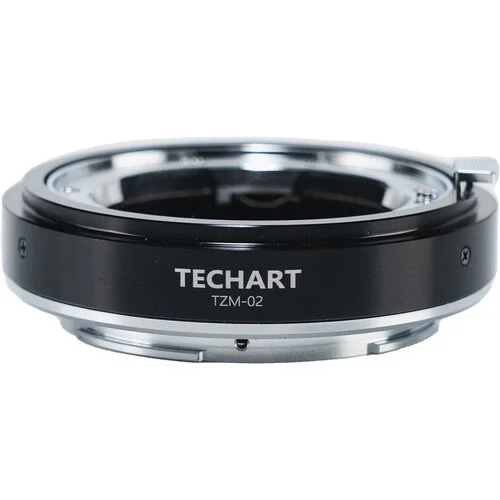
Speaking of M-mount lenses, they pose an interesting alternative to Z-mount glass. The Z-mount is so large and versatile that several manufacturers are making adapters for Sony, Canon, Leica M-mount, Fujifilm X-mount, and others. Buying used M-mount glass and adapting them to the Z-mount may be a great alternative to buying retro-style lenses for the Zf, especially since Z-mount retro options are in short supply. While Thypoch sells an M-to-Z adaptor, the real magic comes from Techart with their Pro TZM-02 Autofocus Adapter, which converts any manual-focus M-mount lens into an autofocus Z-mount lens! This opens up a whole world of possibilities.
Shooting with Two Cameras
When I'm not shooting travel & street photography, I shoot event photography for my church. Most services are shot by a single photographer, and swapping lenses takes too long. My setup for Christmas Eve this year (2025) was my D780 with the 80-200mm f2.8D and my Zf with the 24-70mm f2.8G on an FTZII adapter. Having two cameras, each with a zoom lens, allowed me to move around and photograph whatever I needed without ever changing lenses. And what did I discover about how the Zf handled low light? I discovered that it is fantastic!
The photo below was taken with the Zf at f4, ISO 12800, and a shutter speed of 1/30 of a second, handheld!
Photo taken with a Nikon Z f and a Nikon AF-S 24-70mm f/2.8G lens mounted on a Nikon FTZ II adapter. Photo specs: f4, ISO 12800, 1/30 sec handheld. No denoise applied.
Here is the same photo with Lightroom Denoise applied.
Photo taken with a Nikon Z f and a Nikon AF-S 24-70mm f/2.8G lens mounted on a Nikon FTZ II adapter. Photo specs: f4, ISO 12800, 1/30 sec handheld. Lightroom Denoise applied.
To pixel-peep the photos above, there is a link to a ZIP file containing both photos below. The two photos in the ZIP file differ only in the application of Lightroom Denoise. This photo was taken with an AF-S 24-70mm f/2.8G lens mounted on the Zf using the FTZII (all from Nikon). I’m shooting at f4 in aperture-priority with auto-ISO. Since this is a candlelight photo, auto-ISO jumped to 12,800!
I’m still very happy with my D780. It has great low-light performance, and I have no plans on selling it. It does have a few quirks, and I occasionally have to turn it off and back on to fix software glitches.
A New Way of Shooting
As mentioned earlier in this blog post, my current lens and adaptor setup only allows for one autofocusing lens on the Zf. So, until I get the firmware issues resolved on my Tamron 35mm and until I buy a Monster Adapter LA-FZ1, I’m left with six manual focus lenses, two of which I just purchased. Buying manual lenses was a deliberate choice. I wanted lenses that matched the look and feel of the Zf. Historically, I’ve relied too heavily on autofocus, and if I want to grow in my photography, I need to know how to shoot reliably with manual focus.
Manual focus has always seemed scary to me, which is why I’ve avoided it. Then I realized the problem was that I’m trying to shoot manually the same way I shoot with autofocus, which isn’t what I should be doing. Zone focusing with manual focus lenses has been used reliably since the 1940s and is still used today by many street and documentary photographers. A quick search of “zone focusing” in Google or YouTube will return hundreds, if not thousands, of results, so it’s only a new way of shooting to me, and it’s something I plan on spending 2026 learning and practicing. As always, I look forward to learning something new, posting the results, and having fun in the process.
Tamron Update:
I received my Tamron SP 35mm f/1.8 Di VC USD lens back from Tamron, and they updated its firmware to v3 without charge, and they paid for shipping! I’m happy to report that it works very well on the Zf with the FTZII adaptor, so now I have two AF lenses working on the Zf.